Prayer and Liturgy in Primary Schools
To ensure that the Christ is at the centre of a Catholic school, prayer and liturgy must be at the heart of its community life. They are essential to the school’s Catholic life and mission.
‘The Catholic school is well aware that the community that it forms must be constantly nourished and compared with the sources from which the reason for its existence derives: the saving word of God in Sacred Scripture, in Tradition, and above all in liturgical and sacramental Tradition, enlightened by the Magisterium of the Church.’ Congregation for Catholic Education (2007), Educating Together in Catholic Schools, 26
The community of a Catholic school will generally be inclusive of people who are not Catholics or Christians. This context provides Catholic schools with a unique opportunity to present, in an authentic way, our tradition of Catholic prayer and liturgy, while at the same time providing a welcoming environment for all pupils and staff. In order to respond to this most fruitfully, we are called to understand the tradition of the Catholic faith and maintain an approach that respects the integrity of all members of the school community.
Prayer and liturgy in our primary schools should aim to inspire all those who take part to reflect on the scripture they have listened to and be moved to action to make the world a better place.
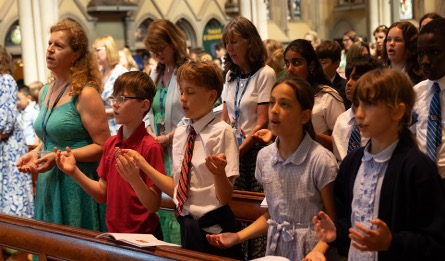
The links below provides those planning or leading prayer liturgy in our primary schools with a wide range of ideas and resources to support them in providing a rich and diverse experience of worship for all in our school communities.

In prayer and liturgy we want all our schools to achieve the following outcomes for their pupils as set out in the Catholic School Inspection framework:
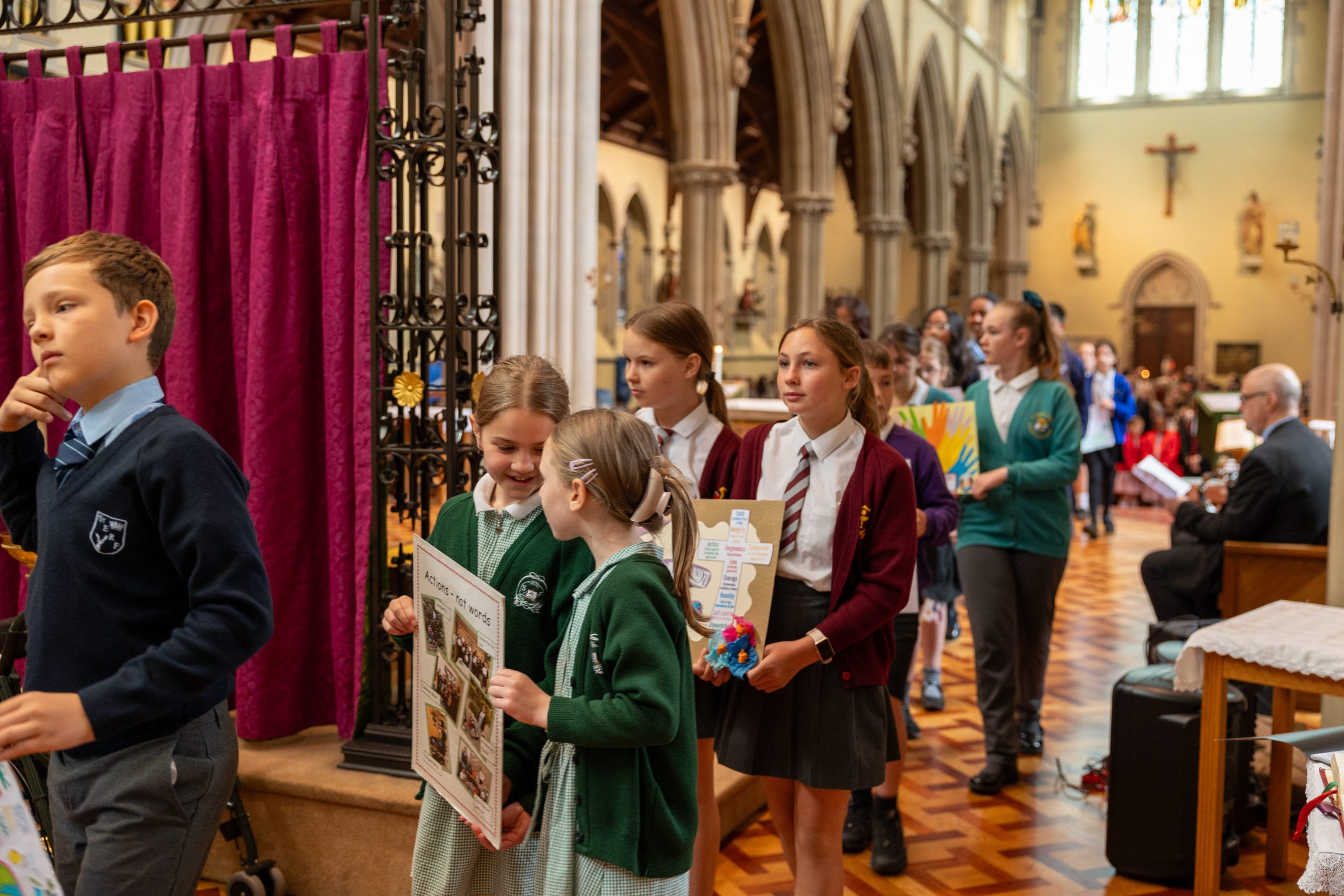
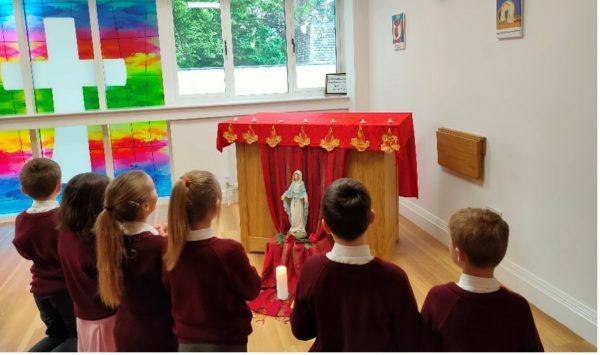
- Pupils respond well to the experiences of prayer and liturgy provided by the school. They participate in them by, for example, reflecting in silence, joining in community prayer with confidence and singing readily.
- Appropriate to their age and capacity, pupils understand a variety of ways of praying that are part of the Catholic tradition. This would include, for example, the use of scripture, symbol, silence, meditation, reflection, and liturgical music. They can describe the parts of the Church’s liturgical year and articulate how it influences the prayer life of the school.
- Pupils work well with others, such as teachers, other pupils, and chaplains, to prepare engaging experiences of prayer and liturgy. Due to the school’s provision of liturgical preparation for pupils, they undertake liturgical ministries willingly and are involved in evaluating the quality of the prayer and liturgy they have planned.
- Pupils are able to recognise and articulate the ways in which prayer and liturgy influence and are influenced by both the curriculum and the wider life of the school.
- Pupils understand how to reflect on their experience of prayer and liturgy. They can articulate the ways in which these experiences have led to action.