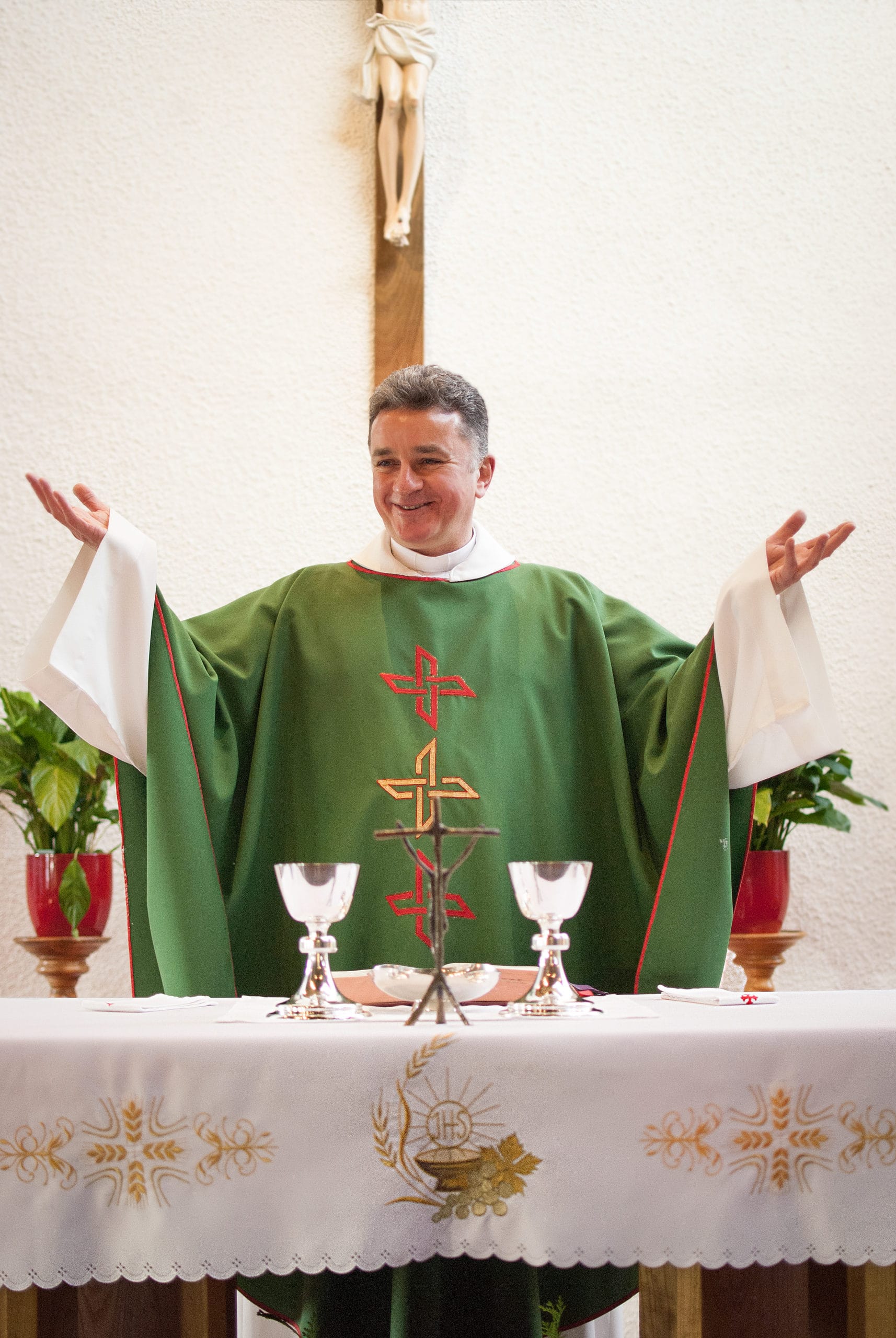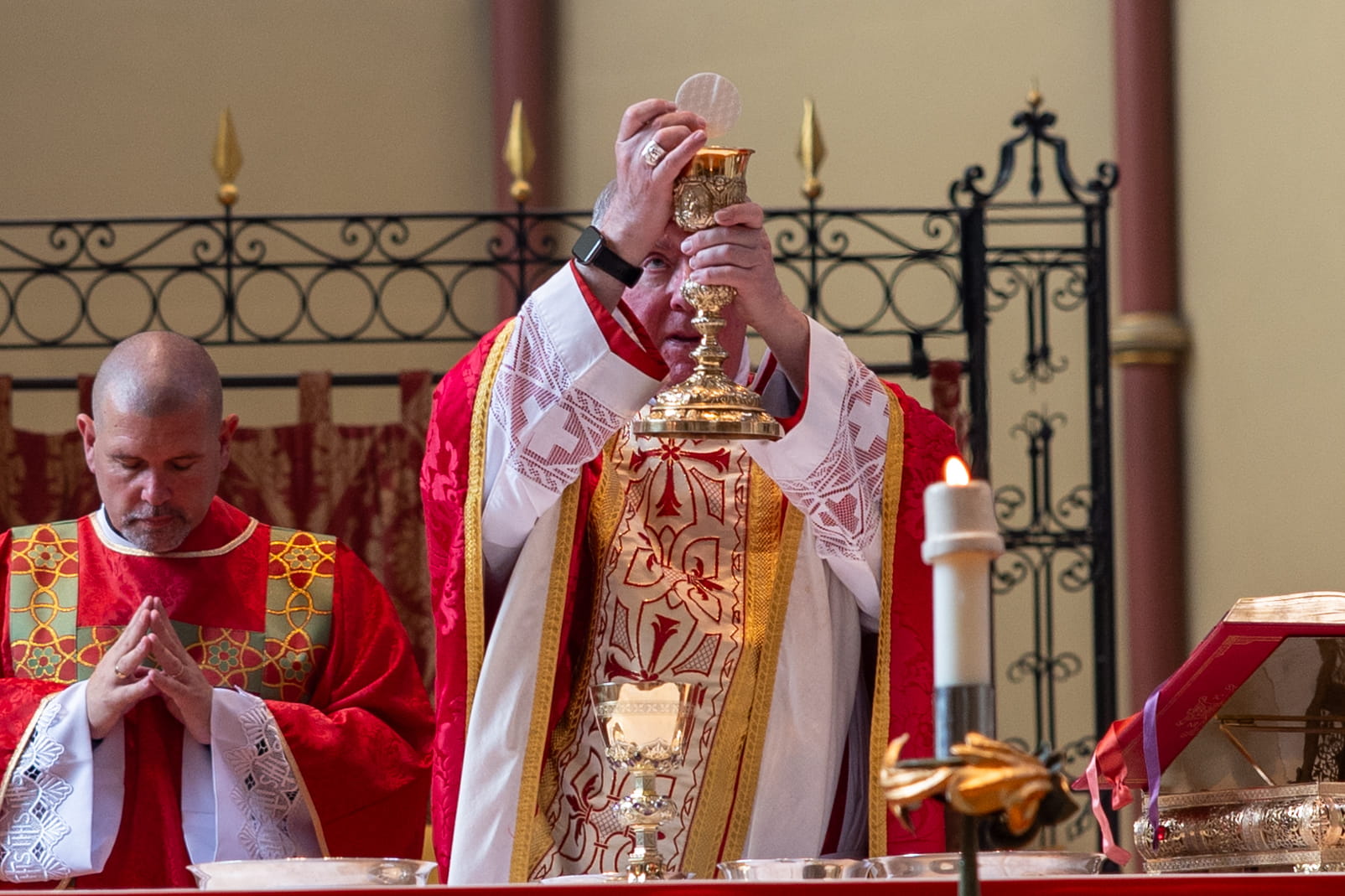
The Eucharist, also known as Holy Communion, is when bread and wine are offered to God at Mass by the priest and, through the power and working of the Holy Spirit, truly become Christ’s Body and Blood. This is known as the ‘real Presence’ of Jesus.
During the Last Supper, Christ broke bread and took a cup of wine and gave them to his disciples and told them to eat His Body and drink His Blood and to ‘do this in memory of me’. For two thousand years, priests, through the words of consecration, have made Jesus truly present in Holy Communion during every Mass. We receive Holy Communion to remind us that we are followers of Christ, united with Him. Food and drink nourish our bodies – Christ’s Body and Blood nourishes us spiritually. As Catholics, we believe that the Body, Blood, Soul and Divinity of Christ is present in the Eucharist, which is why we pay special reverence to it and what remains after Holy Communion is reverently consumed or placed in a special safe called a Tabernacle beside which burns a white or red lamp to indicate Christ’s presence.
Children from Catholic families usually make their First Holy Communion once they have reached the ‘age of reason’ and can understand the significance of the Real Presence of Christ in the Eucharist. Programmes are usually run each year in parishes to prepare children for First Holy Communion and for First Reconciliation (Penance). Adults who have not their First Holy Communion may undertake the Rite of Christian Initiation of Adults (RCIA).