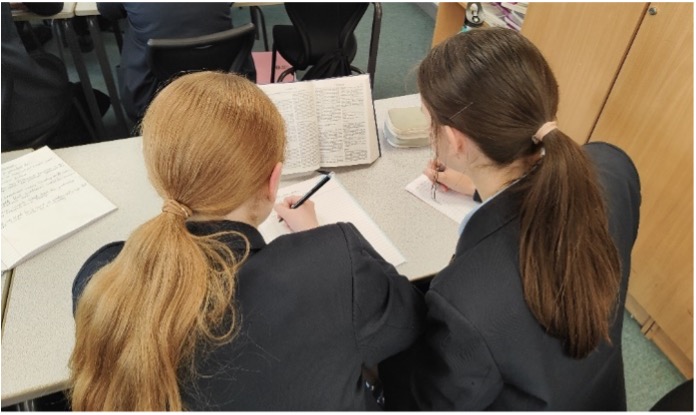
Secondary Religious Education
Key Stage 3 Religious Education
In our secondary schools, religious education is very much at the heart of the curriculum. All our secondary schools dedicate a minimum of 10% of the teaching timetable to the teaching of RE. In the sixth form this is reduced to 5%.
In addition, aspects of religious education and Catholic life are woven into other areas of the curriculum.
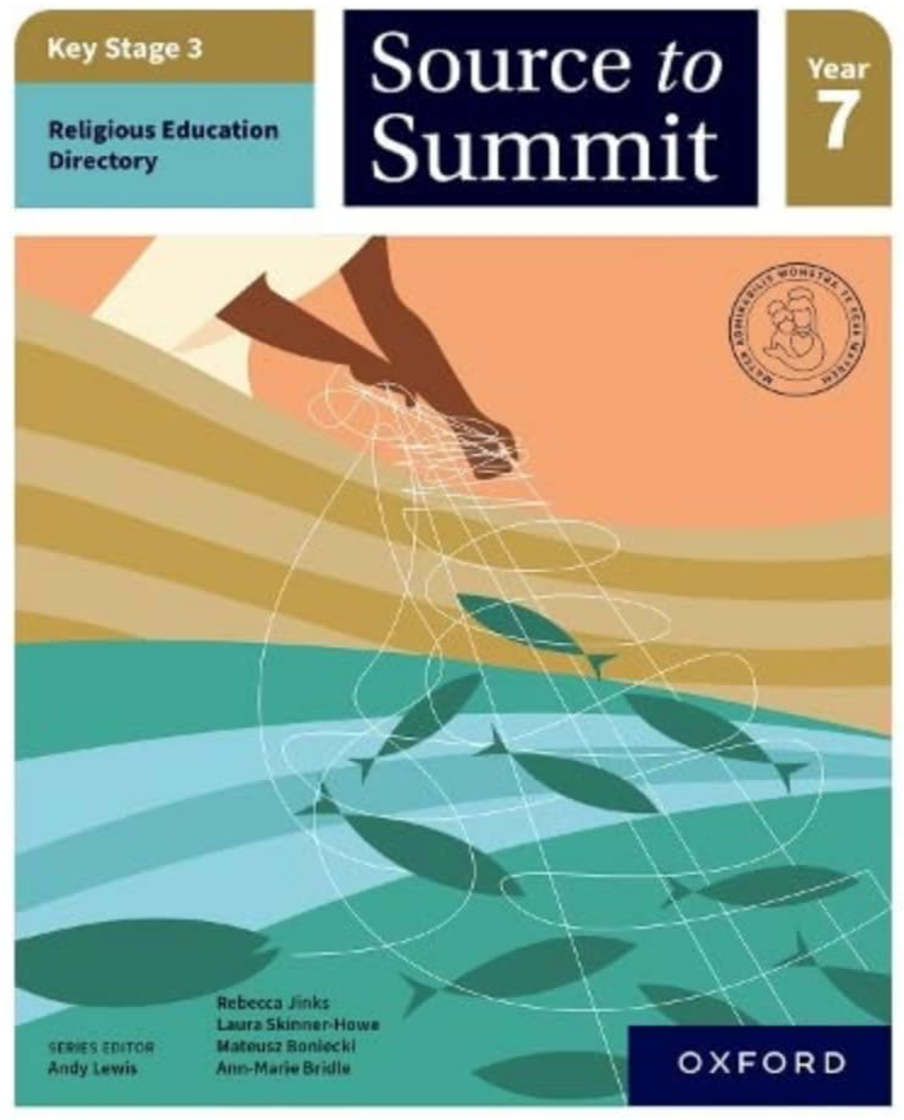
In key stage 3 (years 7 – 9) the RE curriculum is based on ‘To know you more clearly’ the Religious Education Directory. which forms the foundation of religious education in all Catholic schools in England and Wales. The resource recommended by the diocese for key stage 3 is ‘Source to Summit’ published by Oxford University Press.
The curriculum has six components that are known as branches. these map onto the six half-terms of the school year. Each one has a core theme and invites pupils to learn about an aspect of Revelation, Scripture, life in Christ, and life in the Church, and to discern what their learning means academically and experientially enabling them to see, judge, and act through a deeper knowledge of the Christian faith.
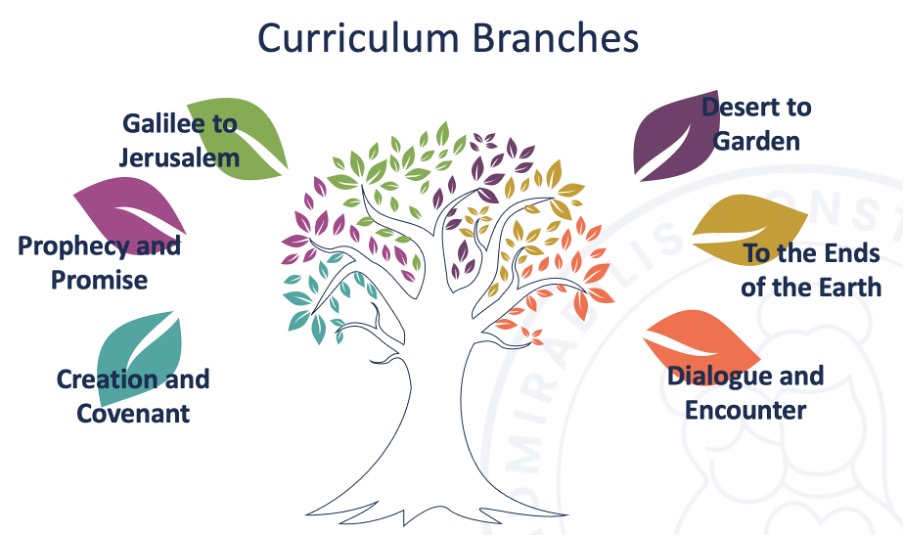
Autumn 1: Creation and covenant: ‘The heavens are telling the glory of God’ (Ps 19:1). In this branch, pupils will encounter the God who creates and calls a people. They will explore revelation of the Christian belief that all that is comes from God, the Creation accounts in Genesis, and scientific explanations of the process of Creation. They will explore the call of God and his covenantal relationship with his people first through Abraham and Moses, then through the narrative of the Old Testament.
Autumn 2: Prophecy and promise: ‘In many and various ways, God spoke to our ancestors by the prophets’ (Heb 1:1). The prophets speak of God reaching to his people, calling them back into a relationship with him. In this branch, pupils will explore the Christian understanding of the teaching of the prophets as they point to the fulfilment of God’s promise in a messiah, Jesus Christ. They will explore the expectant waiting for the Messiah through the Advent season and how this speaks to Christians today as they wait for Christ. Pupils will encounter the story of the nativity of Jesus and the mystery of the incarnation.
Spring 1: Galilee to Jerusalem: ‘God’s only Son, who is at the Father’s side, has made him known’ (Jn 1:18). In this branch, pupils will experience the ministry of Jesus, the Word of God. They will learn about the life of Jesus and his revelation of the Kingdom of God through parables, encounters, miracles, and teachings. They will learn about the call of the disciples and the nature of being a follower of Jesus.
Spring 2: Desert to garden: ‘Christ died for our sins in accordance with the scriptures, and that he was buried, and that he was raised on the third day’ (1 Cor 15:3). In this branch, pupils will study the season of Lent and its culmination in the events of Holy Week. They will learn about the Paschal Triduum at the heart of the Catholic Church’s Liturgy and life. The title of this branch points both to the liturgical journey from the desert of Lent to the garden of Resurrection, but also to the Paschal journey from darkness to light, barrenness to fruitfulness, death to life.
Summer 1: To the ends of the Earth: ‘Go, therefore and make disciples of all nations, baptising them in the name of the Father and of the Son and of the Holy Spirit’ (Mt 28:19). In this branch, pupils will study the events that flowed from the Resurrection and Ascension in the coming of the Holy Spirit and the work of the apostles and early Church. They will also learn about the Catholic Church today as the apostolic Church and how its liturgy and structures flow from the early Church.
Summer 2: Dialogue and encounter: ‘For “In him we live and move and have our being”’ (Acts 17:28). In this branch, pupils will learn how Christians work together with people of different religious convictions and all people of goodwill towards the common good, respecting the dignity of all humanity. They will also encounter other pathways of belief drawing on the teaching of the Church about intercultural dialogue.

Key Stage 4/GCSE Religious Education
As in all Catholic schools in England and Wales, the expectation is that all pupils will study for and sit a GCSE in religious education.
In conformity with the decision of the Bishops’ Conference in 2016, any Catholic school in the Diocese wishing to teach the GCSE in Religious Studies is only to select an examination specification which requires:
a) A study of Catholic Christianity as the primary religion;
b) A 50% study of Catholic Christianity, covering all four topics:
- Beliefs and Teachings,
- Practices,
- Sources of Wisdom and Authority,
- Forms of Expression and Ways of Life;
c) A study of Judaism as the second religion.