Catholic life and mission: to follow you more nearly.
‘When Jesus is asked which is the greatest commandment, the answer is the same in all three of the Gospels in which the question is asked: to love God with all your mind, heart, soul and strength, and to love your neighbour as yourself. This call to love is at the heart of the educational mission of every Catholic school. It is a mission that is clearly echoed in the Second Vatican Council which teaches that the purpose of an education that is distinctively Christian is threefold (Gravissimum Educationis 2). Its first purpose is to ensure that all pupils understand the faith that gives the school its identity as a Catholic school. The second, is to ensure that all are invited to learn how to worship God in spirit and truth through the prayer and liturgy of the Church. The third, is the formation of all to live in conformity with the pattern of human goodness, truth and justice that we find in Jesus Christ. That is, all pupils in Catholic schools are called to know God more clearly, to love him more dearly and to follow him more nearly every day.’ CSI Inspection Handbook
This threefold mission is reflected in the three perspectives of the Catholic School Inspection process. Through religious education pupils are invited to love God with all their mind, through prayer and liturgy with all their heart, soul and strength and through the Catholic life and mission of the school to love their neighbour as themselves.

Mission Statement
A school’s mission statement should be highly visible throughout the school environment. It will clearly reflect the school’s role in the educational mission of the Church, promoting Gospel values and the teachings of the Catholic Church.
The mission statement is a touch stone of school life so that:
- Pupils have a clear understanding of its meaning and can articulate this at an age-appropriate level
- All staff embrace and implement the statement across daily school life through a range of opportunities e.g. class prayers, whole school liturgical prayers, displays, and other activities which reflect the mission
- It is shared with parents and the wider community for example, through school signage, newsletters, email footers, school policy documents, website and parents meetings.
School Environment
Visitors are aware of the distinctive Catholic nature of the school through the physical environment, the presence of images and symbols and the recognition of a learning environment that respects the human dignity of all persons as made in God’s image and likeness.
Every effort is made to provide a spiritually uplifting, stimulating and aesthetically pleasing environment, examples could include:
- All rooms have a crucifix
- All rooms have a cared for, attractive prayer area
- Each class has a ‘liturgy’ box with coloured cloths and good quality religious artefacts
- There are displays in the corridors with reflection on the Mission Statement, information relating to the current liturgical season
- Focal points for liturgical prayers reflect the theme and season
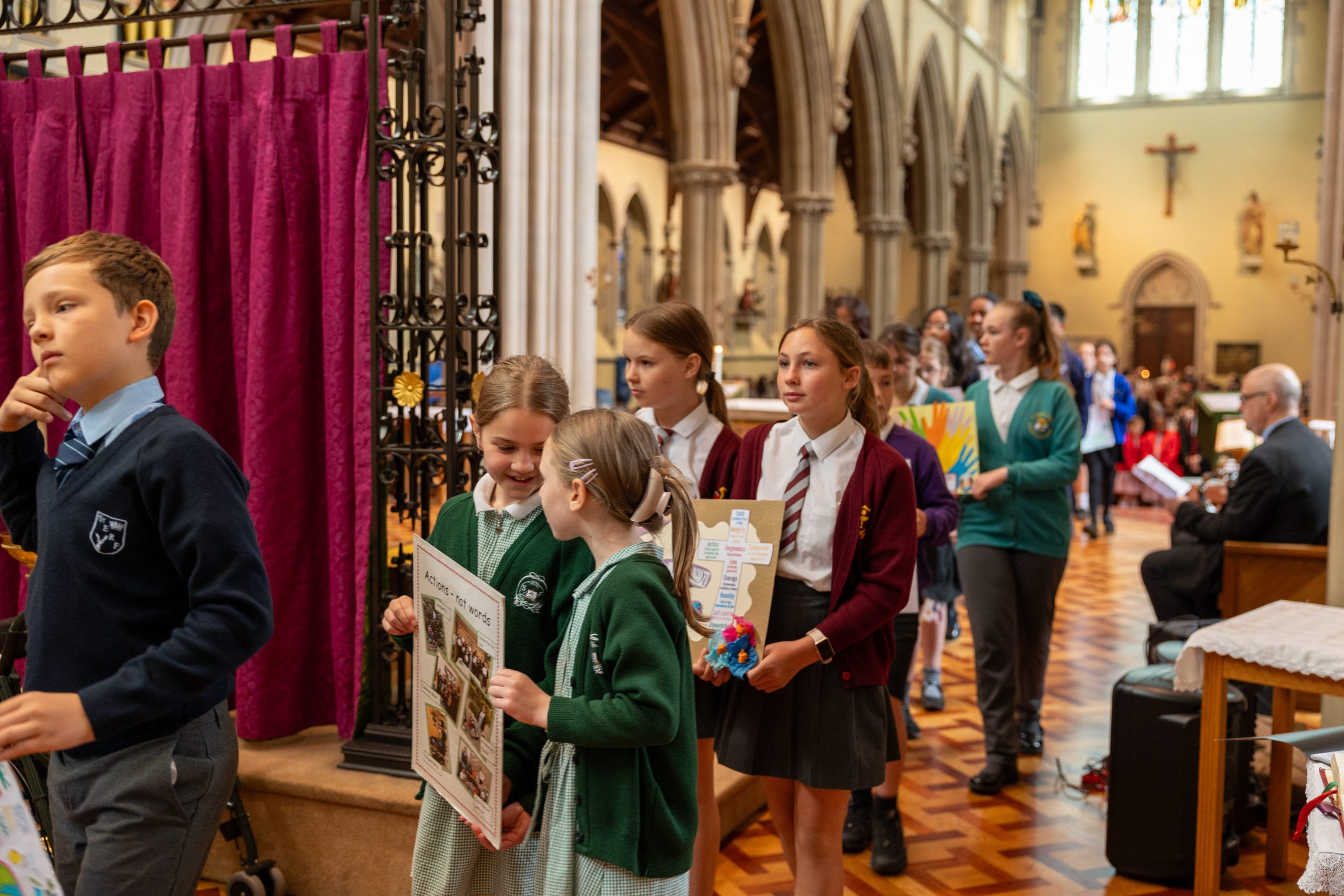
- Displays in the hall document the activities of the School Council, the Fairtrade committee, the environmental group, the school’s work with the local community

- Displays within each classroom reflect the current RE topic being taught, the liturgical season, work produced by the pupils, key prayers and scripture
- There are child-friendly quotes from scripture around the corridors
- The school grounds have a peaceful prayer garden, and eco-friendly area, a school allotment.
Charitable Outreach

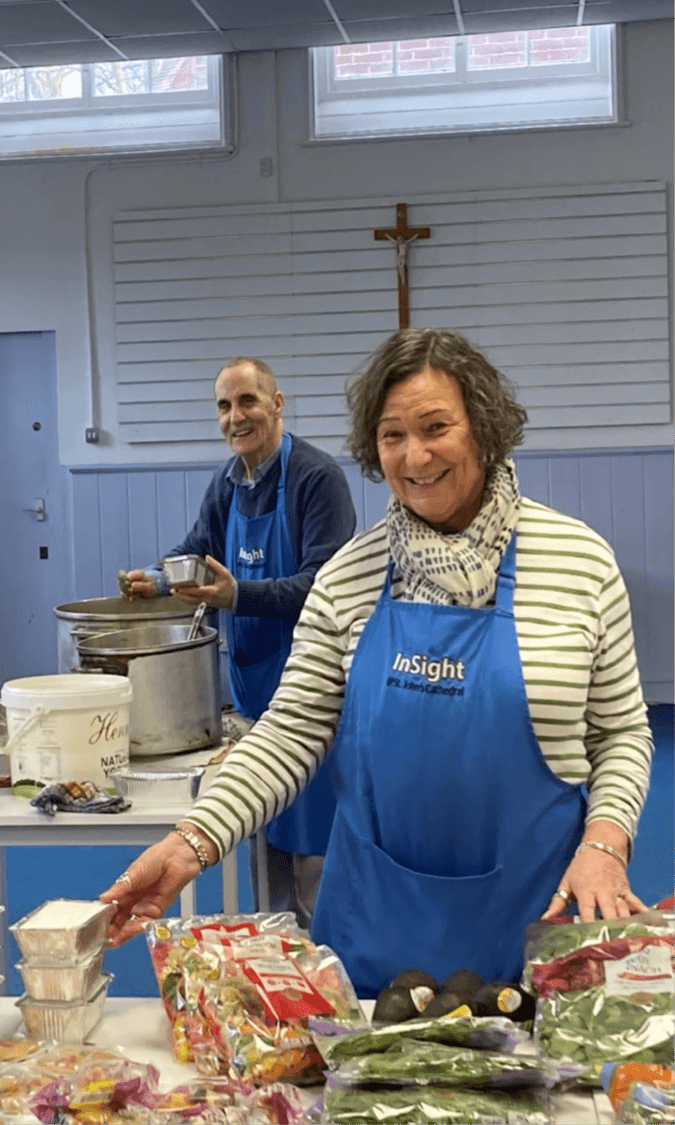
Our schools aim to foster and develop an awareness of the needs of others: locally, nationally and globally, and promote a spirit of generosity and compassion as taught by Jesus Christ. Through timetabled work on Catholic Social Teaching and Fratelli Tutti pupils are taught to stand in solidarity with the poor and vulnerable.
Schools will organise and hold various fundraising events and charitable outreach activities throughout the year, examples could include:
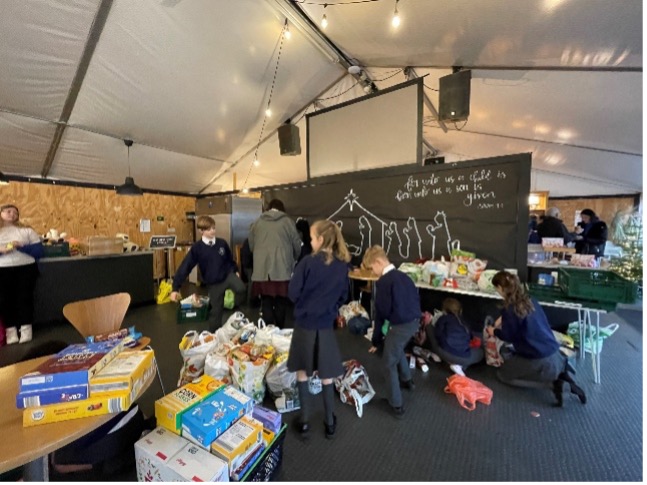
- Harvest – children are encouraged to bring in food for local foodbanks and the school is a permanent collection point for donations throughout the year.
- At Remembrance, the school will sell poppies and related merchandise to raise funds for the Royal British Legion.
- In Advent, a charity of the pupils’ choosing is supported, as well as collecting gifts for the elderly
- During Lent the school can raise funds for CAFOD through activities chosen by the pupils.
- Schools also raise funds for a variety of causes, which they have adopted, through the year such as Mary’s Meals, through cake and biscuit sales and other initiatives.
- Send Christmas cards to elderly parishioners
Pupils are always encouraged to help each other as well as their parents, teachers and other people in the community. It should be the aim that the whole school ethos is one that will foster and nurture a generous giving of self, and an appreciation and respect for others.
Working for Social Justice
Pupils are taught the importance of standing up for social justice as an important aspect of Christian life. This could include planned opportunities for pupils to engage in campaigns for social justice, for example:
- Writing to the local MP
- Celebrating Refuge Week
- Climate change activities e.g. Switch off fortnight
- Supporting Fairtrade Fortnight
- Reduce, reuse, recycle awareness

Catholic Curriculum

‘The Catholic vision of education is distinctive and the beliefs it holds, the values and aspirations it has must inspire the whole of the curriculum.’ NBRIA The Distinctive Curriculum of the Catholic School
The school is a community of learning with a distinctive educational philosophy which is based on the Gospels. Whilst Religious Education is at the core of the core curriculum, this philosophy permeates all the curriculum and activities recognising the needs of each individual member of the community.
At an age-appropriate level children are introduced to the nine principles of Catholic Social Teaching. The school can use child friendly resources to explore the writings of Pope Francis, such as Laudato Si’ and Fratelli Tutti. In this way they can help build their moral compass and enable them to respond to social, moral and ethical issues in the world. The Catholic curriculum should lead and support the charitable outreach and work for social justice.
Relationships, Sex and Health Education is taught in a Catholic context recognising we are all made in God’s image and likeness.
Other faiths are taught as part of the RE curriculum. Learning about the religion and cultures of those who do not share the Catholic faith is one of the ways in which Catholic schools embody the call to love one’s neighbour. It prepares our children for life in modern Britain, giving them an understanding of the beliefs of others.
Chaplaincy
The spirituality and prayer life of the school are an evident part of its Catholic life and mission. The Prayer and Liturgy policy details the school provision. Chaplaincy provision plays an important role in the spiritual and moral development of the whole community.
Schools will usually have a Chaplaincy Team which will consist of both key staff and pupils/students. Their role is to support each member of the school community to grow in their faith and to be part of the pastoral care system in school. They could do this by:
- Maintaining and developing class prayer areas
- Maintaining and developing communal prayer areas
- Writing and leading prayers during whole school acts of worship
- Organising retreat days, days of recollection
- Undertaking large projects such as developing a prayer garden

- Keeping the pupils updated with information about donations to charity, such as for foodbanks and CAFOD
- Being a role model to others by modelling reverence and joy where applicable
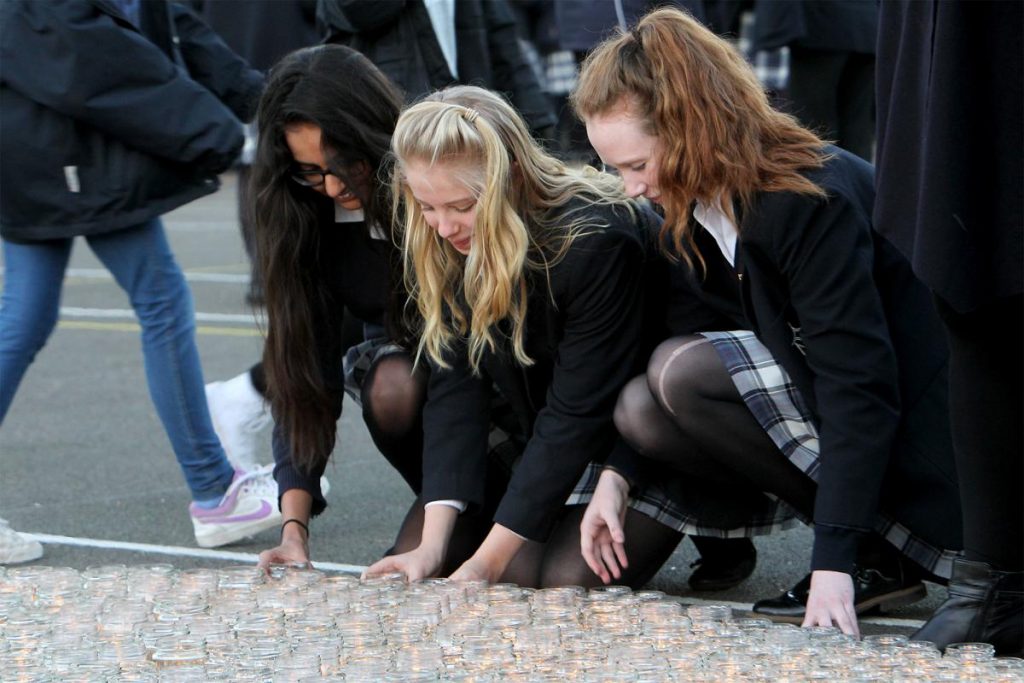
- Writing and help lead whole school acts of worship, such as the Remembrance Service
- Accompanying members of the school community, especially in times of need.
School Community

Our schools are welcoming places for children, families and members of staff from all faiths and none. Recognising that Christ is at the centre of our school they strive to support and value each member, especially the most vulnerable.
Children and staff are encouraged to engage with a range of awards that recognise the work that they do to implement Catholic Social Teaching. This includes the Oscar Romero Award, the John Paul II Award, Faith in Action and Live Simply.
Our schools recognises that that they are part of a family of Catholic schools and work collaboratively with local Catholic schools in clusters, in the Catholic Academy Trust and across the diocese. Through their work in RE children learn about the Universal Church and how we belong to a global family.All are encouraged to live life to the full and reach their full potential. Members of staff have opportunities to take part in the diocesan continuing professional development and formation programme. New teachers are enrolled on the Diocesan Early Careers Programme as part of their induction to teaching in a Catholic school.
Parish Links
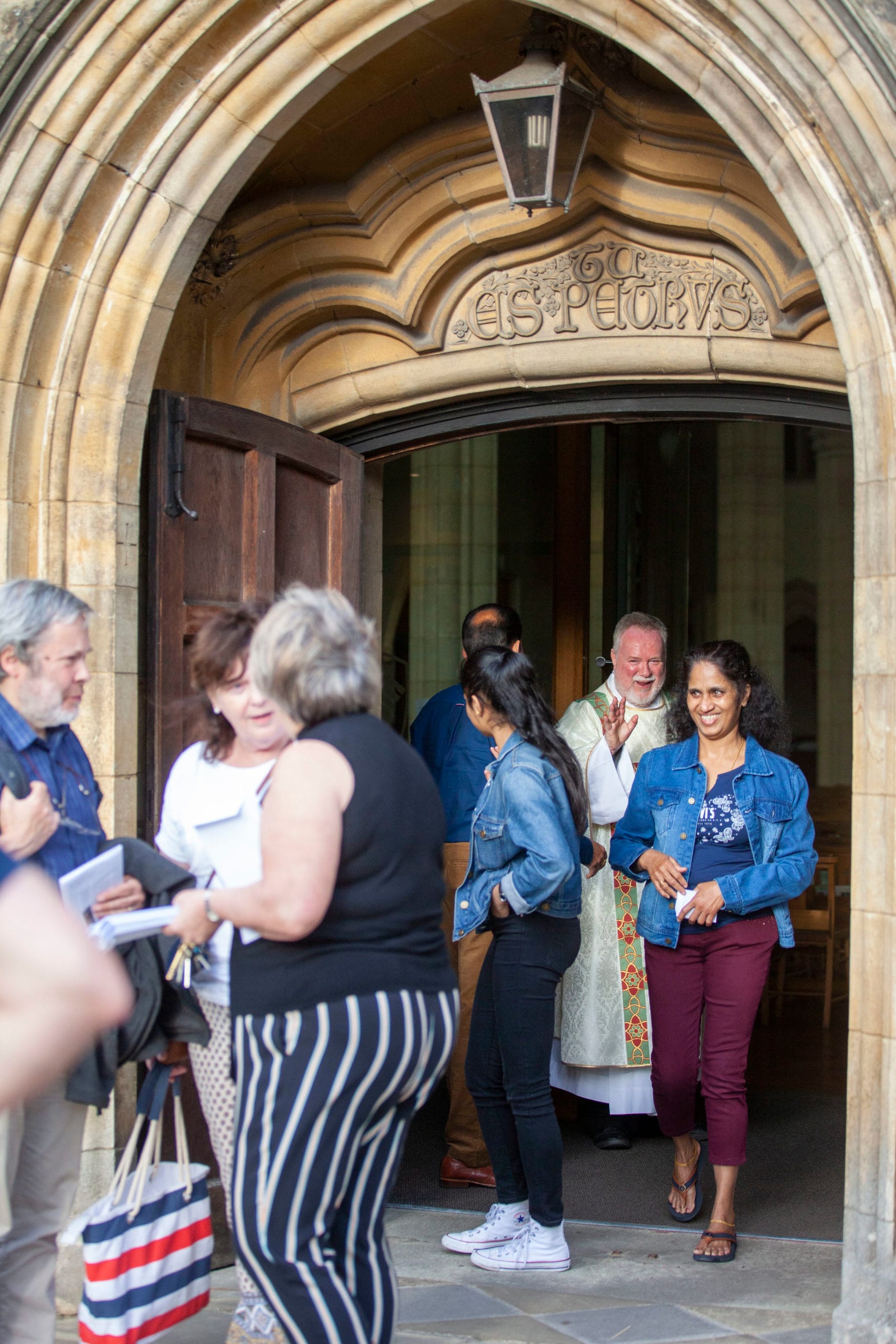
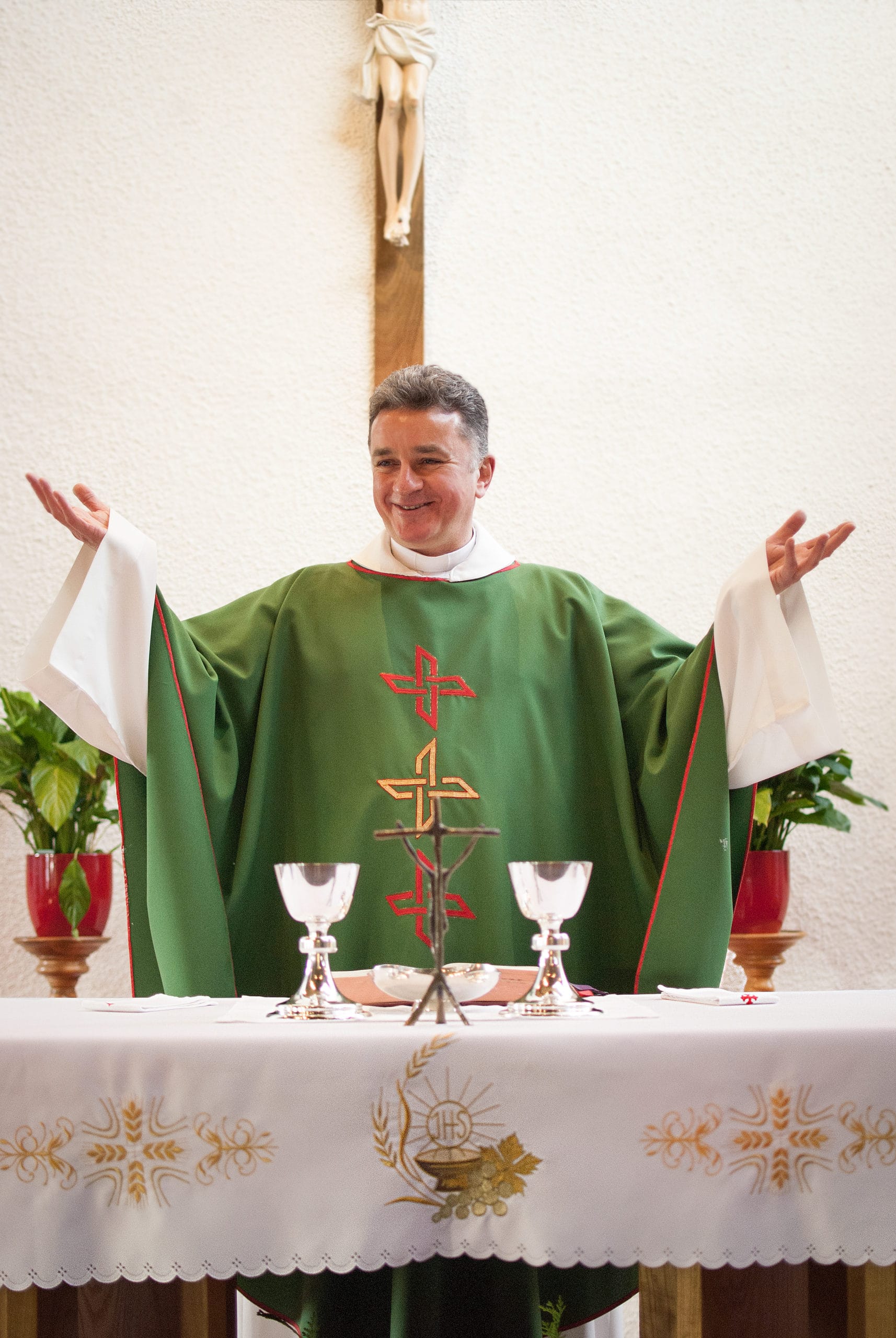
Links with the local parish are a vital part of Catholic life in our schools. Where possible, pupils visit the church to look at the different aspects and features of a church. Where the opportunities arise, the local parish priest may also be called on to support the teaching of curriculum RE in school by visiting to talk about various topics such as baptism, reconciliation and vocation. Links with the priest are strengthened as he celebrates various services in the school with the children and staff, including Mass. Schools in turn will support the work of the parish, for example, through supporting parish campaigns and acing as a collection point for donations. Schools can also share communications from the parish priest with their school community to encourage attendance at church and involvement in church events.

Parents
We recognise that parents are the first teachers of their children and we work in partnership with them. They are encouraged to support Religious Education lessons by helping their children complete homework tasks and discuss with their children work being completed when preparing to receive the Sacraments.
Parents will be invited to attend a variety of school events throughout the year, this could include: class celebrations of the word,, curriculum meetings, whole school Masses and other liturgical services, which take place throughout the year both in school and in the local parish(es).
Parents are encouraged to share their views through questionnaires, as well as at parent curriculum meetings and parents’ evenings.